I have an awkward relationship with Desenzano del Garda. In summer I avoid it. From May through September it is the southern hub of Lake Garda — train station on the Milano–Venezia line, big bus terminal, ferry port — and the consequence of being a hub is that everyone arriving on the lake passes through it. By July, walking the lakefront in Desenzano feels like crossing the concourse of an airport that happens to have water on one side. I won't sit at a café there in August. I won't even park.
From late October through April, though, Desenzano becomes a different town. Quieter. More Lombard. More like what it actually is when you take the tourists out of the equation: a working town of around thirty thousand people, with a Roman past, a Tuesday market that has run since the fourteenth century, and a small but genuinely good restaurant scene. Off-season Desenzano is one of my favourite places on the lake. In summer I would not write a sentence like that without a glass of wine to back it up.
What changes when the cruise crowd leaves
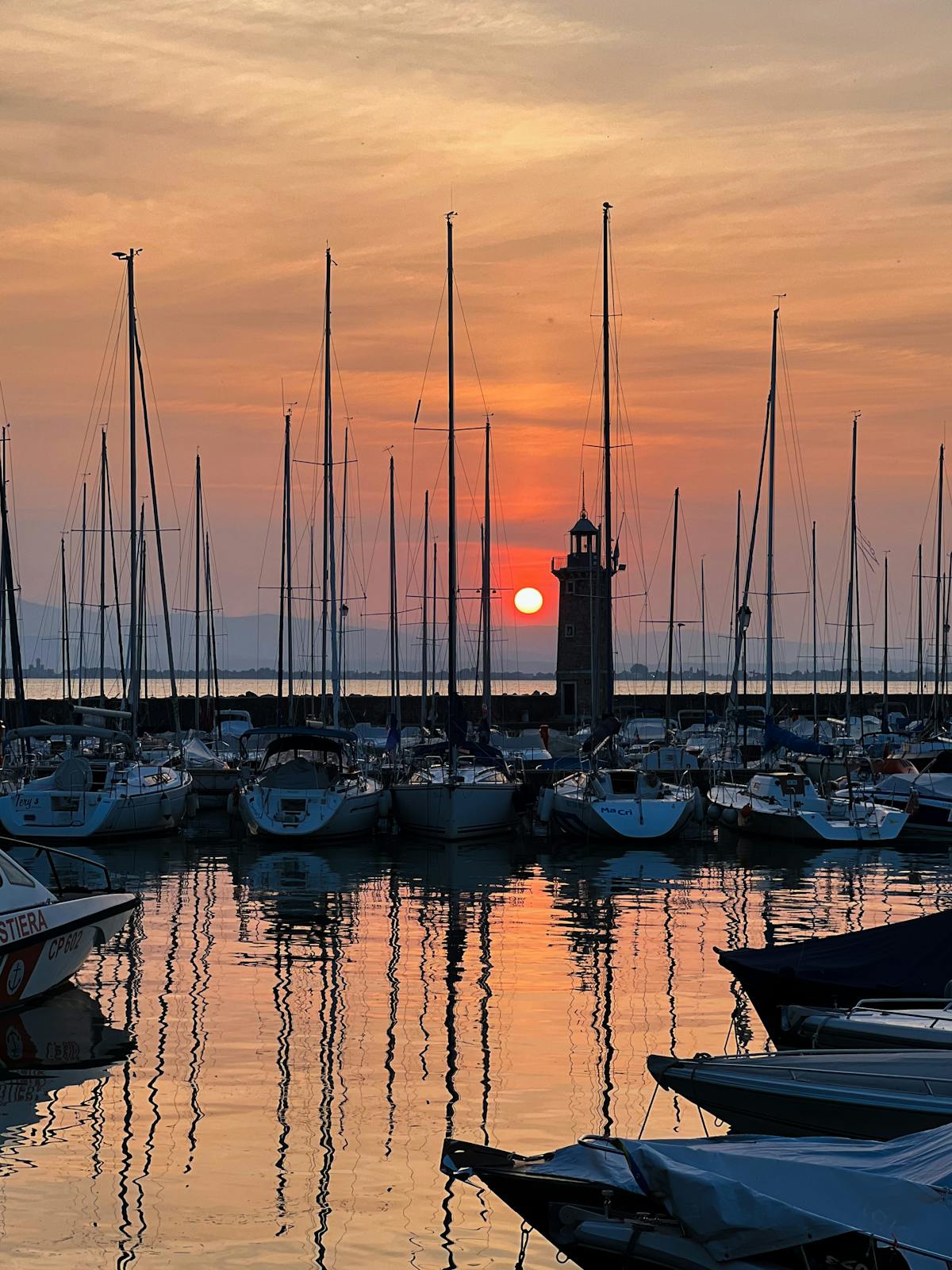
Desenzano sits at the southern tip of Lake Garda's western shore, on the Lombard side. Its position — equidistant from Milano and Verona by train, an hour each way — is exactly what makes it the obvious gateway to the lake, and exactly what fills it with arriving tourists in summer. From late autumn the day-trippers thin out. By January, what remains is a Lombard town with a faded grand-tour atmosphere: stucco façades on the lakefront, a small castle on the hill, an old port, and people who actually live there walking dogs, ordering espressos, doing the shopping.
In off-season, café tables are easy to get. Service is unhurried. Locals at the bar speak Brescian dialect to each other and switch to Italian for me. Hotels offer rates closer to half what they charge in July. And the things that make Desenzano historically interesting — its Roman villa, its market, its old harbour — are unchanged. They are simply, finally, the centre of attention rather than something tourists walk past on the way to a boat.
The Roman villa, almost empty
Just back from the lakefront, on Via Crocefisso, sits one of the more remarkable Roman sites in northern Italy: the Villa Romana di Desenzano. A late-imperial residential complex from the fourth century AD, partially excavated, with several large polychrome mosaic floors preserved in situ. Most depict hunting scenes, marine motifs, geometric patterns. The site is enclosed and protected, with a walkway that lets you see the mosaics from above without stepping on them.
In high season it gets a moderate stream of visitors. In January and February, on a weekday morning, you may have it entirely to yourself. I once spent forty-five minutes there in early February — me, the custodian, a cat asleep on the radiator at the entrance — and walked out feeling I had been somewhere genuinely private. Entry is around six euros. The site is open year-round, Tuesday to Sunday, with morning and afternoon hours that vary slightly by season; check before you go.
Practical: Villa Romana
Address: Via Crocefisso 22, Desenzano del Garda. A ten-minute walk from the train station, fifteen from the lakefront. Tickets at the door (no booking needed in winter). Allow an hour for a thorough visit. Closed Mondays. Updated hours via the regional museum poles website at polomusealelombardia.cultura.gov.it.
Tuesday at Piazza Malvezzi
Every Tuesday morning, year-round, Piazza Malvezzi and the surrounding streets fill with the Desenzano market. It's been running, in some form, since the fourteenth century — a continuity I find more impressive than the contents of any single stall. Vendors arrive at dawn, set up under arcades and along the lakefront promenade, and pack up by early afternoon.
What you find: cured meats from the Brescian foothills, formaggella di Tremosine cheeses, olives, fresh produce, local honey, kitchenware, household linens, second-hand books, a few stalls of flowers. In summer it's chaotic with tourists. In January it's mostly elderly Brescian women with rolling shopping bags arguing politely with cheesemongers, and me, watching them argue, taking notes.
One Tuesday in late November, I bought a kilo of small green olives from a woman who told me they had been picked the previous Saturday from a tree she could see from her kitchen window. I have rarely tasted olives that fresh. That is the kind of detail off-season Desenzano gives you and August Desenzano does not.
A morning route from the station
If you arrive by train from Milano or Verona, here is what I would do with a January morning. Two and a half hours, ending in lunch.
- 9:30 — Coffee at Caffè Strambini. A classic Italian bar on Piazza Malvezzi, marble counter, decent pastries, the kind of espresso that makes the rest of the morning possible. Five minutes from the station.
- 9:50 — The Tuesday market (if it's a Tuesday) or a slow circuit of the historic centre and the small port if it's any other day. Either way, walk down to the harbour and look at the boats and the castle on the hill above.
- 10:45 — Villa Romana di Desenzano. Mosaics, an hour, almost no one else there. Walk back via Via Castello if you have time, for the view.
- 12:15 — Lunch at a lake-fish trattoria. Bagatta alla Lepre on Via Bagatta, or Esplanade on the lakefront if you want a view. Both serve fritto misto di lago, lavarello al forno, the standards. Reservation rarely needed in winter.
Where to eat lake fish in winter
Off-season is when Desenzano's restaurants are at their best, in my view. Tables are easier, the kitchens are more attentive, and the wine lists open up — many places run by-the-glass selections from local producers that get pushed aside in summer for international labels. Lake-fish dishes (lavarello, sardines, perch) are seasonal and best eaten when the lake itself is cold.
For something cheaper and more casual, Esplanade on the lakefront has a midday menu of pasta and grilled fish, around twenty euros for two courses, and a terrace that catches whatever winter sun is going. In December it's mostly locals having a long lunch on the way home from the office. I find it deeply restorative.
For the working logistics of moving around the southern lake in winter — what's running, what isn't, where to catch a bus when the ferries stop — see my south Garda transit guide. For a slower kind of day on the same shore, my Padenghe entry is the obvious next read. And if you're on the eastern side of the lake instead, Lazise or Bardolino covers that side's two walled towns.
Useful pages: visitgarda.com for general orientation; comune.desenzano.brescia.it for market and event details; the regional museums portal at polomusealelombardia.cultura.gov.it for current Villa Romana hours; and reviews on TripAdvisor if you want corroboration on the trattorias I've named.