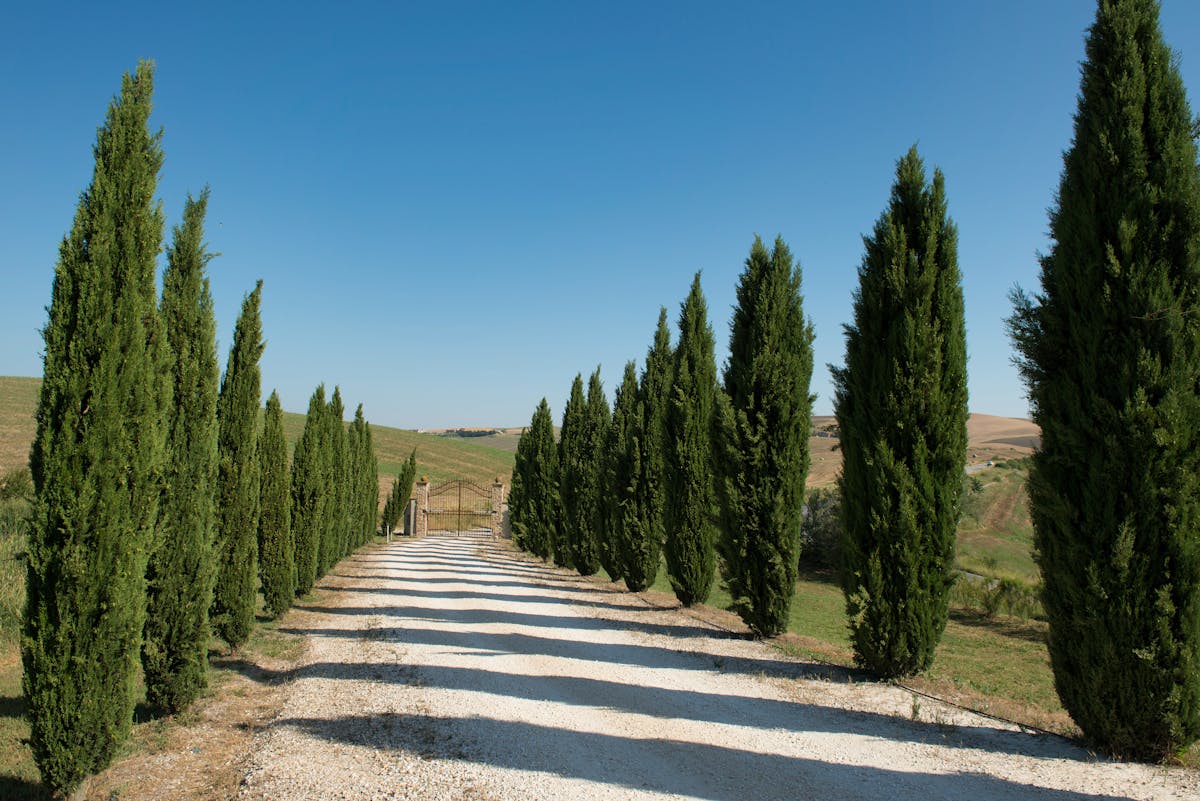
My first time at Punta San Vigilio, I assumed it was a public park you walked through to reach the lake. There's no big sign. Off the lakeside drive between Garda and Torri del Benaco runs a narrow road, an unmanned barrier that's almost always lifted, and a slow descent through dark cypresses opening onto a small stone harbour with a single white Renaissance villa above it. That's the whole place. It takes three minutes to take in — but you're meant to stay for four or five hours.
The headland, in one paragraph
Punta San Vigilio is a small wooded headland on Garda's eastern shore, halfway between Garda town and Torri del Benaco. Its sixteenth-century villa above the harbour was designed by Michele Sanmicheli, the Verona architect of the Porta Palio. Descended from one of Venice's old patrician lines, the Gritti family has run the estate for almost five centuries — and still does. Locanda, cypress avenue, olive grove, and the stone harbour all belong to them; the harbour is technically a private mooring that the public has been allowed to walk through since long before any of us were born.
Adjacent to the Locanda — but separately operated — is Parco Baia delle Sirene, a paid beach club with sun loungers, a swimming bay, and a snack bar. Travel writing confuses the two; they share a postcard but very little else.
The Locanda San Vigilio
This inn has been operating since the sixteenth century. Twelve rooms upstairs are almost always booked by repeat guests. Downstairs, the restaurant serves lunch and dinner from late spring through autumn, closing early November to early March. Walk-ins on weekends are out; on a quiet weekday in May, sometimes possible.
Inside, the room is small and slightly formal — white tablecloths, a single arrangement of garden flowers per table, waiters in waistcoats who have worked here longer than most guests have been married. In summer, most seating moves to the pergola terrace above the harbour. Lunch runs from twelve-thirty to about three.
Cypresses are the loudest thing on the headland. In a south-west wind they make a sound like distant rain that never quite arrives — and if you sit on the harbour wall for ten minutes you'll hear nothing else.
The rhythm of a Sunday lunch
I've spent a handful of long Sundays here, mostly in May or June when lake water is cold but air on the terrace is warm enough for short sleeves. Shape of the meal is always the same — price and time commitment only make sense as one thing.
You arrive at twelve-thirty, sit down, order a glass of something to start — Franciacorta brut, or a glass of the house Lugana. Olives and pickled vegetables appear while you read the menu slowly. Forty minutes have passed before you've ordered. Then a primo (risotto with lake fish, or pasta with slow-cooked trout ragù), a secondo (lavarello, baked coregone, grilled meat for non-fish guests), a cheese course or fruit dessert, coffee, a second coffee. By three-thirty you've been at the table for three hours. By four you're walking down to look at the boats from the water side. No second act.
What to order, what to skip
This kitchen is at its strongest with lake fish — almost the entire point. Lavarello (whitefish — coregone in standard Italian) and trota (lake trout) appear in different forms across the season. If forced to pick one dish, I'd order the risotto with lake fish; lightly mantecato at the end, threaded with smoked trout when available, finished with lemon zest. Grilled lavarello with herbs is the safest secondo. Pasta is good but not why you're here. Antipasti are correct but unmemorable. Dessert reads better than it tastes; I skip it and order an extra coffee with a small grappa.
Booking, prices, and timing
You need to book. On weekends in summer, two to three weeks ahead. In May, June, and September midweek, a few days is enough. In high season — late July to mid-August — book before you leave home. Reservations go through the Locanda's own site, where a contact form gets a reply within a working day. Phoning works better if your Italian is up to it.
Lunch lands between sixty and eighty-five euros per person before wine. Add fifteen to thirty per head for a glass each and a small grappa. Coperto runs around five euros; service is already inside menu prices.
| Choice | Per person | What you get |
|---|---|---|
| Two-course light lunch | €55–65 | Primo or secondo + glass of wine + coffee |
| Three-course classic | €75–95 | Antipasto + primo + secondo + glass + coffee |
| Full long lunch with wine | €95–130 | Three courses + half-bottle + dessert + coffees |
Booking practicalities
Kitchen serves from 12:30 to about 14:30; a 13:00 booking gives you the longest sit. Children are welcome but the room is quiet — a family with younger children I last sat next to ate in roughly an hour and went down to the harbour while the parents had coffee. Smart-casual is right; nobody dresses up, nobody arrives in a swimsuit.
Best months: late April through June, then September. July and August work but the headland is busier and the harbour can feel a little crowded by mid-afternoon. Closure runs from early November to early March, sometimes with a brief Christmas window — confirm directly if you're aiming for a winter Sunday.
Where to put it in a day
From Sirmione, San Vigilio is about fifty minutes by car — east along the SR11 to Peschiera, then north up the SR249 through Lazise, Bardolino, and Garda, with the headland coming up just before Torri del Benaco. From Garda town it's a ten-minute drive or a thirty-minute walk along the lakeside path — I'd choose the walk if the weather's right.
Without a car, ATV bus 484 from Garda's central piazza runs roughly hourly in season and stops within five minutes' walk of the headland. VisitGarda has the live timetable. Last bus back: around seven in summer, six in shoulder season.
Shape of the day: something brief in Garda or Bardolino in the morning, drive or bus to the headland for a one-o'clock lunch, then drift back through the Affi vineyards for an hour at a small Bardolino producer. For wine context, see the Lugana wine entry; for which months, the month-by-month read. To compare eastern-shore towns, see Lazise vs Bardolino. Michelin's guide entry is concise; Baia delle Sirene takes its own bookings.
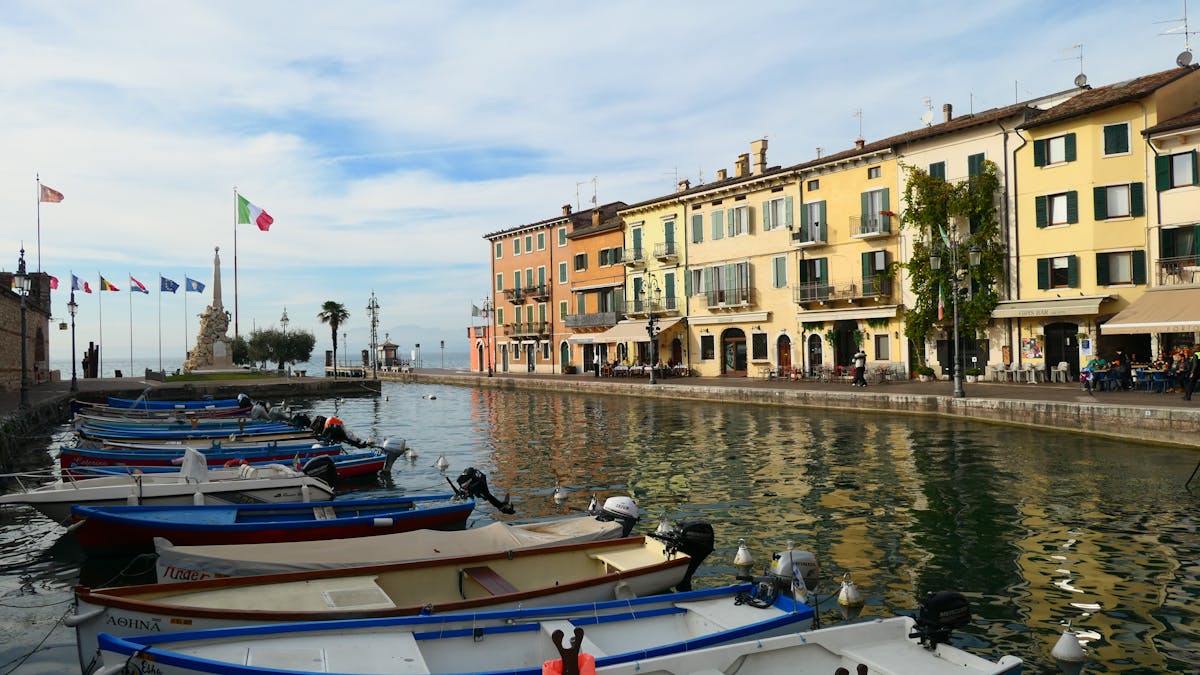
Lunch ends around three or three-thirty. You walk down, sit on the harbour wall, watch small wooden boats coming and going. Cypresses are doing their slow rain-sound. Someone next door is unpacking a swimsuit for a late dip. No urgency to leave. That's the point of the headland — the restaurant is just what gives the afternoon a shape.