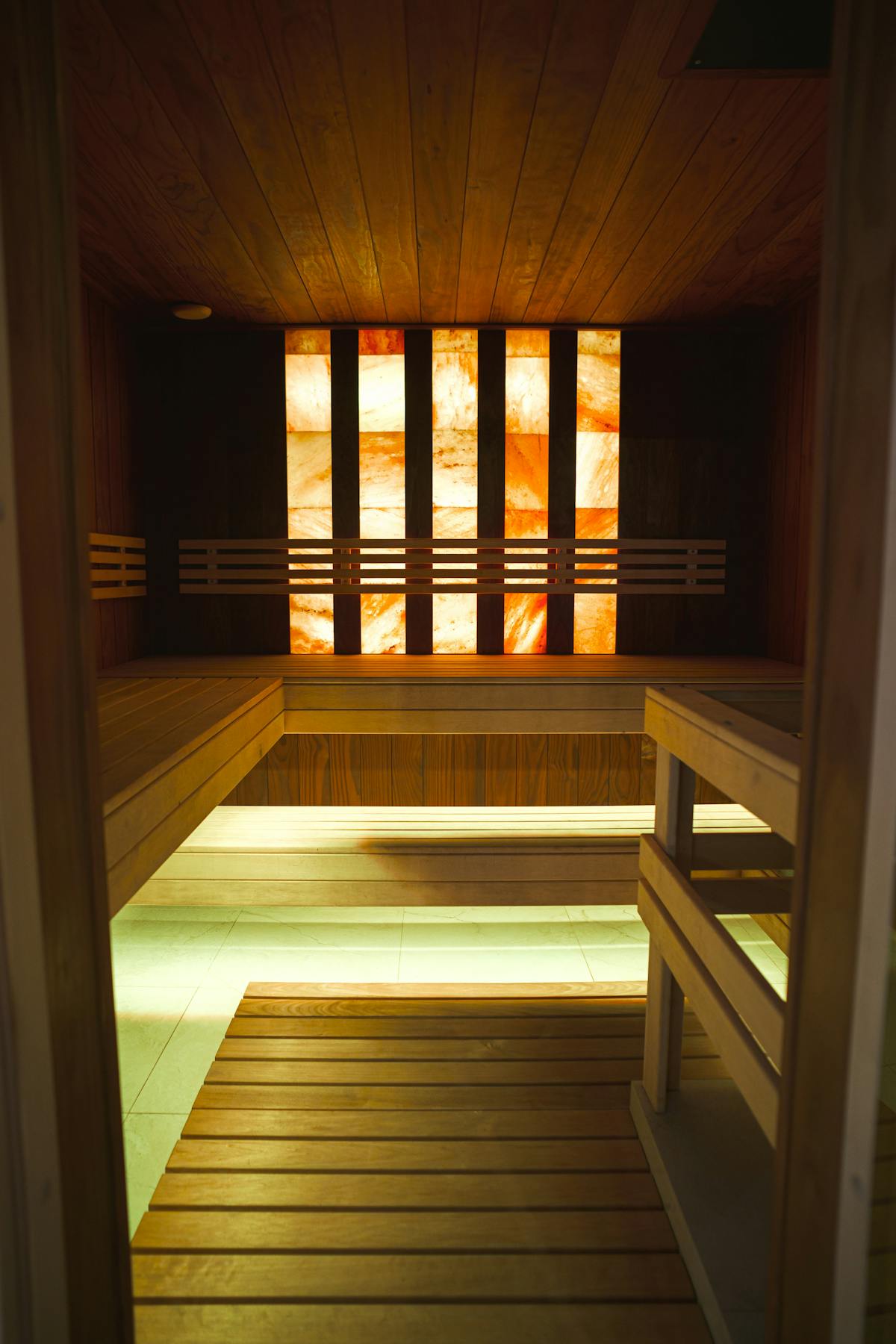
People ask me all the time which thermal place to book on Sirmione, and the question always assumes there's one. There are two. Both are fed by the same underwater spring — the Boiola, which surfaces about three hundred metres off the peninsula at around sixty-nine degrees Celsius — and both pump that water into pools cooled to roughly thirty-six. But the experience of using them could not be more different. One is a modern resort spa with sauna circuits and a salt grotto. Another is essentially a clinical thermal hospital that happens to have a swimming pool. After eight years of working it out for visiting friends, I've stopped recommending them interchangeably.
One spring, two centres
Same water feeds both, but they evolved for different reasons. Aquaria Thermal SPA opened in 1997 and was substantially refurbished a few years ago; it's the centre most foreign visitors mean when they say "the spa at Sirmione." Terme di Catullo, attached to the Hotel Terme di Sirmione, is older, and its identity is rooted in termalismo — thermal medicine prescribed by GPs and partly reimbursed by the national health service. School groups and pensioners come to Catullo for inhalation treatments. Couples on a long weekend come to Aquaria for the lake-view infinity pool.
What you're choosing between, then, isn't really a difference in the bathing itself. Water in both pools sits at about thirty-six degrees, smells faintly of sulphur, and leaves your skin feeling slightly silken for a day afterwards. Your choice is about what surrounds the water — saunas and a quiet lounge, or treatment rooms and the smell of antiseptic down the corridor.
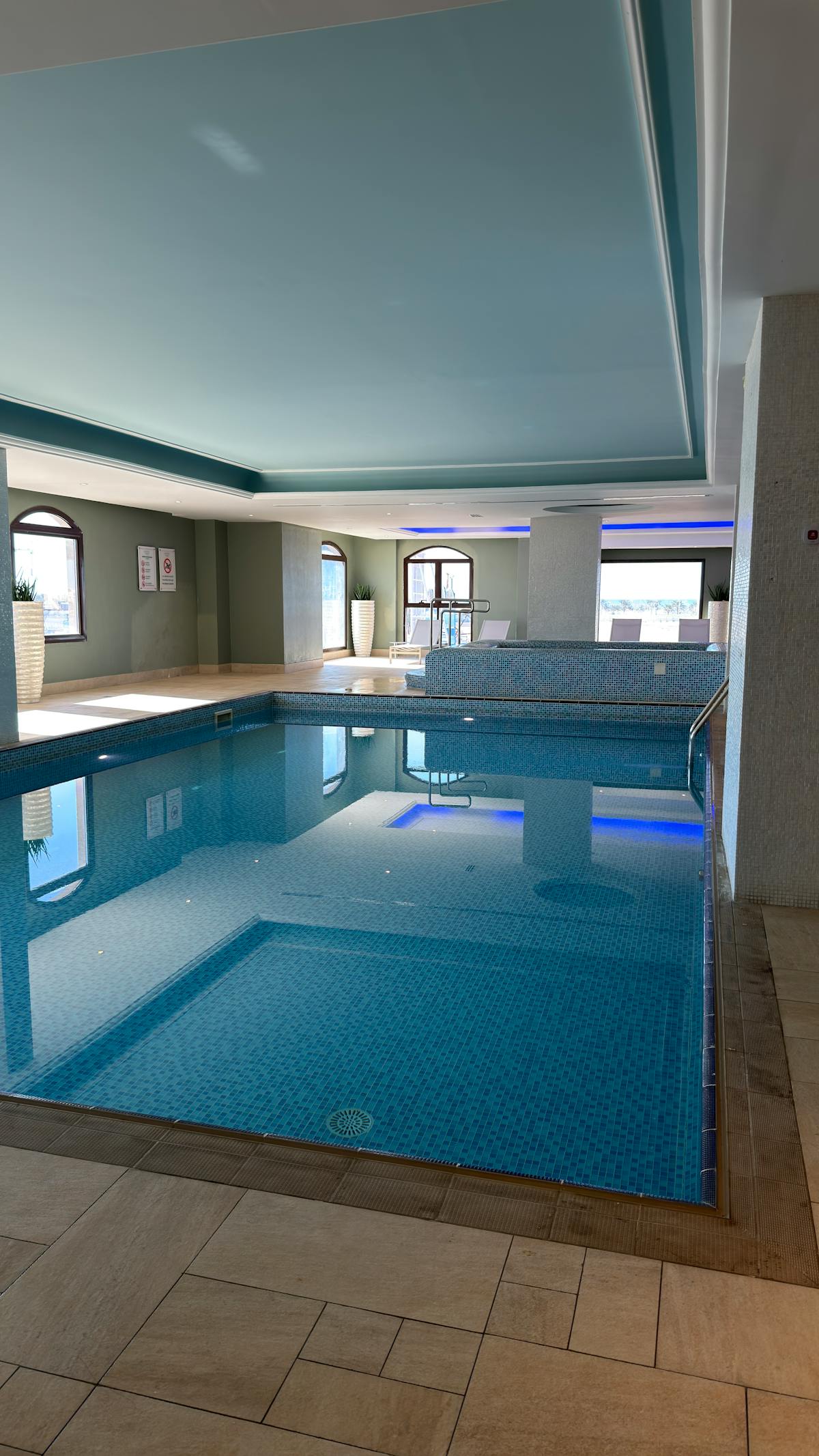
Aquaria Thermal SPA — the modern day pass
Aquaria is what most people picture. Its complex sits at the northern tip of the peninsula, a five-minute walk past the Castello Scaligero, and looks out across the water toward Punta Grò. Inside you'll find two outdoor pools — one a long lap pool kept at thirty-three degrees, the other a wide thermal basin at thirty-six — plus an indoor pool, a smaller hot whirlpool, and a sauna circuit with steam room, Finnish sauna, and tepidarium.
My favourite room is actually the salt grotto, which sits off to one side of the indoor area. It's a quiet, slightly chilly space with walls of Himalayan rock salt and reclining chairs; ventilation circulates micronised salt particles, and after twenty minutes you can taste it on your lips. Almost no one uses it. I've been the only person inside maybe half the times I've gone.
Day passes are the standard ticket — six or seven hours of access, depending on the time of year. Half-day passes (three hours, mornings or afternoons) are also sold but tend to disappear fast online in summer.
Practical detail
Aquaria runs a lockers-and-wristband system. You pay at the counter, get a wristband, and tap it on a locker to claim it. Robe rental is around eight to ten euros and you collect it at a separate kiosk inside. Slippers with rubber soles are required everywhere — buy a cheap pair on the way in if you've forgotten yours, because the rented ones run absurdly large.
Terme di Catullo — the medical side
Terme di Catullo is the older operation. Its building, attached to the Hotel Terme di Sirmione on Piazza Don Piatti, has the institutional feel of a midcentury sanatorium — pale tiles, fluorescent corridors, signage in three languages. Main draws are inhalation treatments for chronic respiratory complaints (rhinitis, sinusitis, mild asthma), mud-and-water treatments for joint pain, and a separate spa pool reserved largely for hotel guests.
Italians come here on a doctor's referral. A waiting room on a Tuesday morning in November is full of pensioners reading the local paper, and the queue moves with the orderly briskness of a regional health clinic. If you've never seen this version of Italian wellness, it's worth understanding even if you don't use it.
For day visitors without a prescription, Catullo's offering is much narrower. You can book a single treatment (fango mud wrap, inhalation cycle, balneotherapy bath), but the price-to-pleasure ratio doesn't compare to Aquaria. I don't send leisure visitors here unless they specifically want the medical experience.
When to go (and when not to)
Aquaria's worst hours are eleven in the morning to two in the afternoon. Day-trippers from Verona and Brescia fill the place, the outdoor pool gets noisy, and the lounge chairs disappear. From ten to eleven there's a brief window of calm; after that, abandon hope until late afternoon.
Two slots I always recommend are the nine o'clock opening and the five-to-seven evening session. At nine the staff have just turned on the lights, the indoor pool is mirror-still, and you can do twenty laps in the thermal basin without seeing another swimmer. By five the day-trippers leave to drive home, and the light over the lake softens. From mid-October through April the evening slot is genuinely the best moment of the day — steam over warm water, cold air above it, a sky going pink.
For Catullo, weekday mornings are when the inhalation rooms run hardest; school groups and Italian state-cure patients tend to fill Tuesday and Wednesday from nine to noon. Weekends are quieter on the medical side but the leisure pool gets busier with hotel guests.
Prices, hours, and a comparison
Below are the day-pass figures I see most often. Prices vary with season — high summer pushes everything to the top of the range, January and February to the bottom. Numbers are 2025–26 typical.
| Type | Aquaria | Terme di Catullo |
|---|---|---|
| Format | Day spa, pools + saunas + grotto | Medical-thermal centre + spa pool |
| Day pass price | €60–75 (half-day €45–55) | Treatment-by-treatment, €25–55 each |
| Hours | Daily ~9:00–22:00 (varies seasonally) | Mon–Sat ~8:00–17:00 |
| Best slot | 9am opening or 5–7pm | Late afternoon, fewer state-cure patients |
| Best for | Couples, leisure visitors, first-timers | Sinus or joint treatment, curious medical-spa fans |
What I'd skip if I had one afternoon
If you have only an afternoon on Sirmione and the question is "do I do a thermal thing?" — yes, the place is Aquaria, book the half-day pass starting at three. Skip the Catullo medical side entirely; it isn't built for casual visitors.
Skip the in-house Aquaria restaurant too. Food is overpriced and reliably mediocre — last time I had a thirty-euro bowl of unmemorable risotto and a salad that had clearly come out of a bag. Eat in the old town instead, ten minutes' walk away, where you can have a proper plate of bigoli at any of the trattorias on Via Vittorio Emanuele for less.
Booking and small things to know
Book Aquaria online twenty-four hours in advance whenever possible. Official bookings at termedisirmione.com handle both Aquaria day passes and Catullo treatments; their flow shows real-time availability, which matters because Saturday afternoons sell out by midweek in summer. Cancellation up to forty-eight hours ahead is straightforward.
Bring less than you think. Your own swimsuit is required. A towel comes with the rented robe but lots of regulars bring their own — see the packing notes for the full list. Cash is useful at the snack bar; card readers fail at the towel kiosk often enough that I now keep a twenty in the locker just in case.
Water itself is the least surprising part of the day. Sulphur, bromine, iodine, magnesium — the analysis sheet on the wall reads like a chemistry pop quiz, and the smell, faintly mineral and slightly eggy, takes about ten seconds to stop noticing. Once you've done a slow lap of the outdoor pool with your shoulders just under the steam, you've forgotten the spreadsheet of decisions that got you in. That, after eight years and however many visits, is still the bit I keep coming back for.
For more on how this water got here in the first place, the Boiola spring entry is where I'd start. The two-thousand-year context — Catullus, the Roman bath complex, the nineteenth-century rediscovery — sits in the history piece.